
Couple in stylish kitchen

Outlook for UK house prices in 2026

By James Sproule, UK Chief Economist

Published: 17 February 2026
Reading time: Three minutes

The interest rate cutting cycle has slowed and the UK economy is sickly. What does that mean for the housing market? Our UK Chief Economist James Sproule explains what influences house prices and how those factors will play out in 2026.

Housing has long been an obsession across the United Kingdom. Ask people how much money that have invested in their pension, and more often than not the answer is alarmingly vague. Ask them how much their home is worth and the answer is not just immediate, but more accurate than an internet land registry search, and they could probably tell you how much their neighbours’ houses were worth as well. That is what comes from being more people’s largest asset and indeed for many people the asset that is going to be crucial in making their retirement achievable. 
Interest rates outlook

There are two broad ways to look at house prices. Firstly through how affordable homes are ie house prices against earnings, as well as how much of a person’s income is taken up with mortgage payments. The second is to look at yield: what sort of return on the capital value of a home could an owner receive were they to rent it out? 

Over the past year we have seen that the median earnings figures have grown by over 4% and while this growth is expected to fall over the course of 2026, it still looks set to remain above the Bank of England’s expectations and its ideal level if inflation is ever to fall to its target level of 2%. 

As to interest rates and thus the affordability of mortgages, investors, and our own forecasts Opens in a new window, are looking for two more reductions in interest rates this year. An interest rate of 3.25% is something that anyone looking at a mortgage will welcome. 

Will house prices go down in 2026?

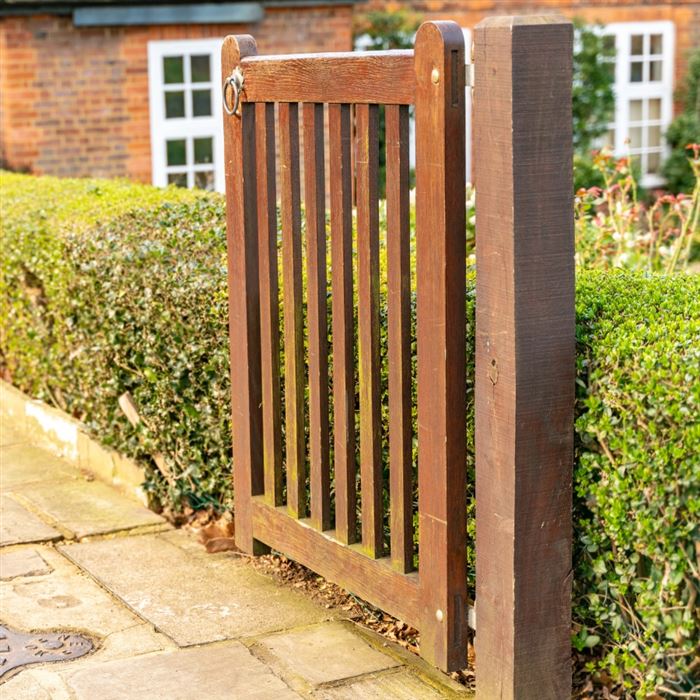
Gate to garden

But before we think that the housing market is set to boom, there is a final critical factor: consumer confidence. For many people embarking on their on their biggest financial commitment requires confidence, and confidence has been in short supply of late. 

Yes, consumer confidence is better than it was — it reached an absurd all time low in September 2022, but it is still looking anaemic. 

So if confidence is not robust enough to tempt a rush of buyers, what is driving property prices? The answer is yield. Of course most people buy a house to live in it, but there are enough rentals around, and landlords pay the same price for a property as owner-occupiers, so rental yields are a good guide to the state of the whole market. 

Real value of housing is falling

Over time, residential housing typically yields about 4% more than a “risk free” ten-year UK government gilt. When interest rates and gilt yields rapidly rose in 2022, property prices were slow to respond. This meant that the premium, that is the additional 4% landlords expect in order to compensate them for risks from bad tenants, to void periods, the premium was squeezed to less than two percent. 

This was clearly not a sustainable position and either rents needed to go up, or capital values needed to fall. Or both. In fact we saw private residential rental rents increasing by 9% at the end of 2024 and they were still rising at a rate of 4% as of the end of 2025. 

Turning to capital values, growth peaked in the autumn of 2022 and fell precipitously after that, going negative - even with inflation - in mid-2023. Today residential house prices are rising by about 1% less than inflation, meaning the real value of housing is falling by that 1%. 

Without a recovery in consumer confidence, this seems likely to be the pattern for the coming year: modest nominal price growth, real terms price falls, while rental increases continue to moderate. 

Is the best course to simply wait?

We see zero evidence that the desire to own a home has faded; yes the rate of owner occupation in the UK did fall, it bottomed out in 2016 at 63%, but it has since recovered to sit at 65%. So there is long-term demand. 

Property as either a pure investment, or a home, is not like a stock or a share: location and indeed ambience matters. Looking to the future, to be in a position to move rapidly if the ideal property comes up for sale could well be the most sensible way to navigate an uncertain market.