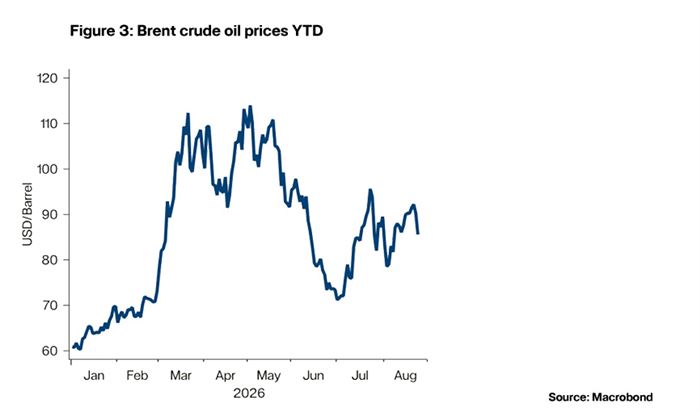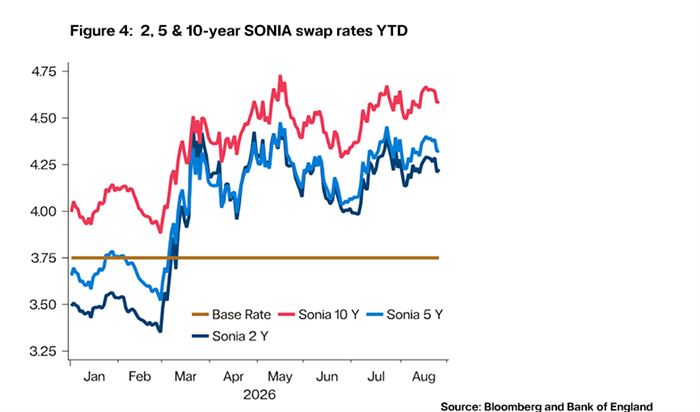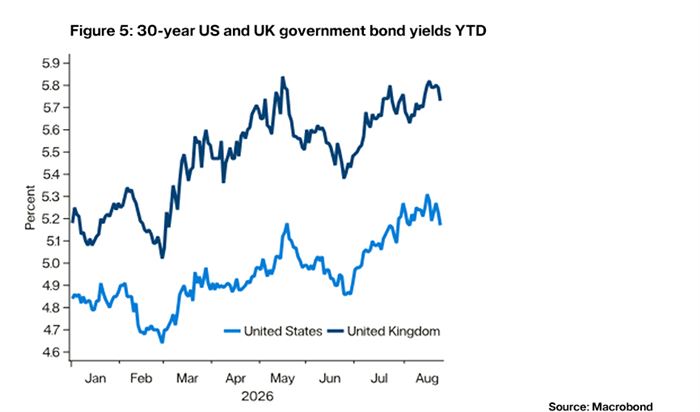
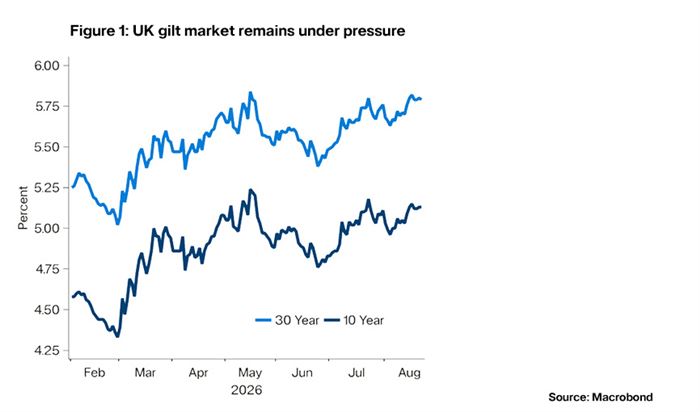
Since the last Rate Wrap, some red lights on the economic dashboard are flashing that little bit more brightly. Geopolitical risk remains on the agenda with oil prices staying at elevated levels. Moreover, UK gilts have continued to face strain with the 10-year yield above 5% again (as of 25.08) as August saw developed sovereign bond markets under pressure across the board. This is primarily the result of fiscal concerns relating to the sustainability of government finances as well as increased competition for investor capital in the context of the AI boom.
Despite these concerns, UK domestic data continues to show that compared to previous expectations the economy has been far more resilient to the consequences of the US-Iran war. Q1 and Q2’s growth of 0.6% and 0.4% respectively was notably better than expected, and likely points to households reducing their savings rates to deal with cost of living challenges. Annual inflation jumped from 2.6% to 2.9% in July, accounted for by the increase in the household energy price cap, but across the year CPI prints have notably undershot expectations. While the energy price shock has lifted headline inflation, and will continue to do so with a further rise in the household energy price cap in October and possibly in January next year as well, disinflation in services inflation and wage growth seem to have helped somewhat offset the impact so far.
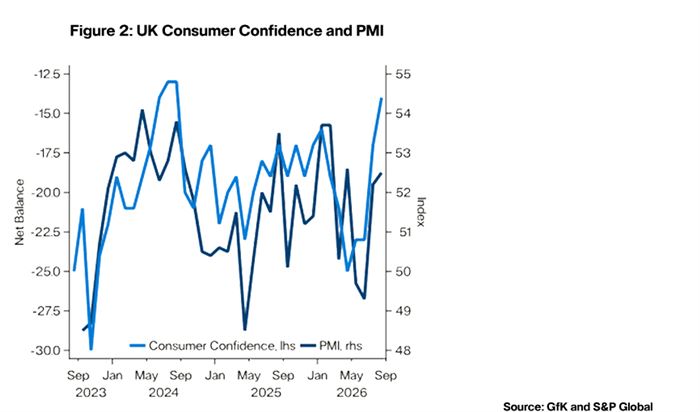
Business and consumer confidence surveys are telling a reasonably good story, too. August’s provisional PMI registered at 52.5, indicating reasonable private sector expansion, while consumer confidence rose by three points due to improved sentiment from a change of resident in 10 Downing Street. This rosy picture looks set to be short-lived, however. Inflation is now expected to be north of 3% for the remainder of the calendar year, geopolitical volatility remains ever-present, and concerns about a fresh round of tax rises in the Budget on 28 October will no doubt dampen confidence. Growth is set to be suppressed in the second half of the year.
Turning to the latest Bank of England decision on base rate, the MPC’s “wait and see approach” continues with rates held at 3.75%. Six members backed a hold in rates and three advocated for a hike. The doves are reassured by evidence of continued disinflation and also point to the tightening of financial conditions (ie higher government bond yields) as being a useful “insurance” against upside inflation risks. The hawks are less convinced about the disinflation process (many pay surveys suggest earnings are hotter than the official ONS data, for example), and argue that a proactive rate hike is needed to tackle upcoming second-round effects from the energy price shock. For example, some of these effects are expected to materialise at the end of this year and beginning of next year when many people have their pay reviews.
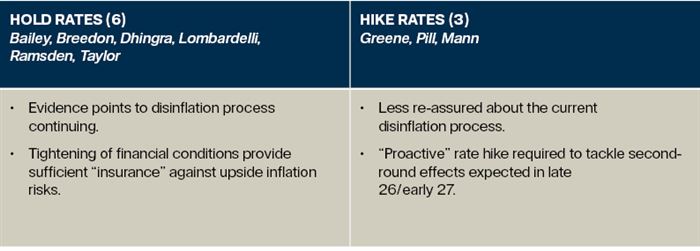
Clare Lombardelli, an MPC member currently in the “hold rates” camp, is thought to be the closest to switching her vote to a hike. Ms Lombardelli was clear at the press conference after the July decision that her vote to keep rates at 3.75% was “not a close call”. However, given oil market futures remain high it would seem likely that concerns around second-round effects could very plausibly spread beyond the current hawks, and there is a strong possibility that at least two further MPC members will end up backing a base rate increase at some point this year.
Meanwhile, look out for our next set of financial and economic forecasts for the UK and elsewhere which will be published in the next Global Macro Forecast on 9 September.
Daniel Mahoney, Senior Economist, UK