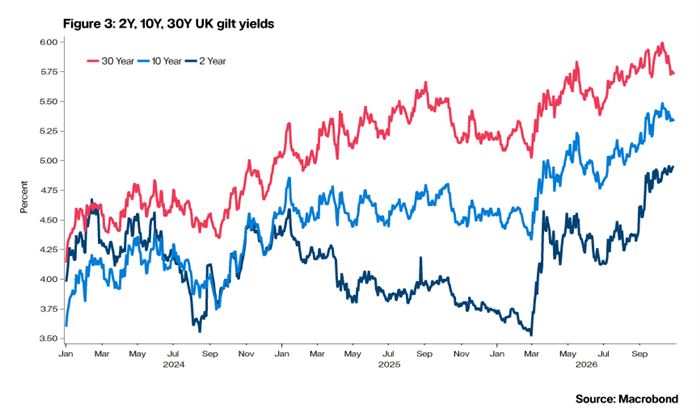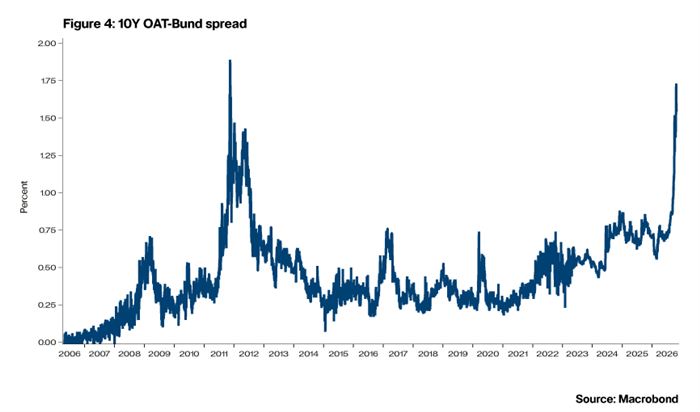
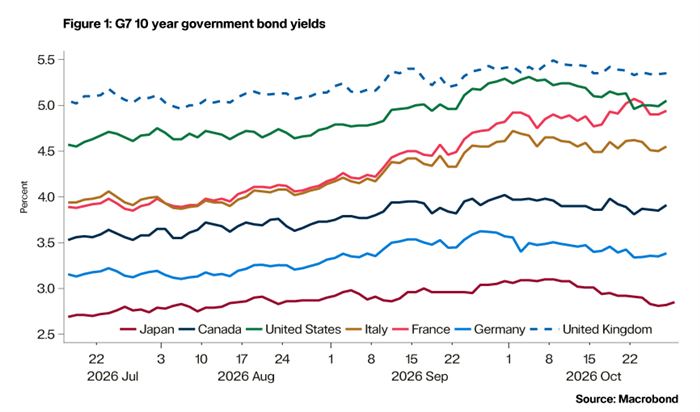
From a macro perspective, the budget was a fairly inconsequential event, delivering only modest fiscal changes. While headroom against the government's fiscal rules narrowed and fiscal policy was tweaked at the margin, the overall package was close to expectations and led to virtually no market reaction. This was all broadly expected and Chancellor Healey will be pleased that he’s continued a run since late July of UK domestic politics not leading to any major moves in gilt yields. Indeed, as highlighted in the previous Rate Wrap, the spread between gilts and many Euro government bond markets has narrowed since the summer, a trend that we previously predicted Opens in a new window.
However, longer-term difficult issues have been punted to the Spending Review, which could potentially take place as late as autumn next year. Current plans do not address how the UK will deliver an additional £11bn by 2030 to hit a target of spending 3% of GDP on defence, and existing plans for fiscal consolidation imply real-term cuts to some government departments. Healey will hope that geopolitical risk recedes and the economic outlook, in turn, improves by the time of the Spending Review, but this is clearly far from guaranteed.
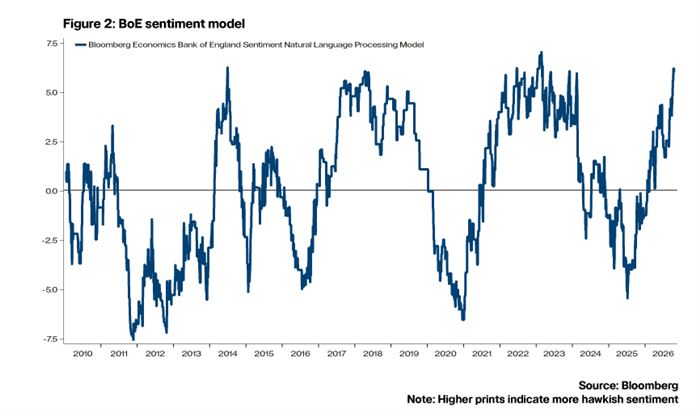
The budget is small in fiscal terms and, as a result, will not materially affect interest rate expectations. Recent UK macro developments are pointing in a firmly hawkish direction. Even with the government’s announcements to ease cost of living pressures, inflation is now on track to be well north of 4% by the beginning of next year right at the time when many people have their pay reviews.
Moreover, latest jobs data suggests that the UK’s employment picture is beginning to stabilise, so the Bank of England (BoE) cannot rely too much on the labour market being weak enough to bear down on potential second-round effects arising from the energy price shock. And economic activity continues to show signs of resilience, with the composite Purchasing Managers Index (PMI) rising from 52.0 to 53.1 in October.
As we projected in our latest Global Macro Forecast Opens in a new window (GMF), the BoE is now lined up to increase interest rates for the first time since the US-Iran war at its next meeting on November 5. In the GMF, we expected this to be the only hike of the cycle. Even that represented a significantly more hawkish outlook than prior to the US-Iran war, when we anticipated two rate cuts. However, the persistence of the energy price shock suggests the BoE will likely need to tighten further than we previously anticipated. We will update our forecast in due course to account for this. However, financial market pricing for four to five rate hikes over the next year still appears excessive.
Daniel Mahoney, Senior Economist, UK