In the last Rate Wrap we pointed out that since the onset of the US-Iran war, the UK economy has shown unexpected resilience. However, there is no getting away from the fact that the rest of this year looks exceptionally challenging.
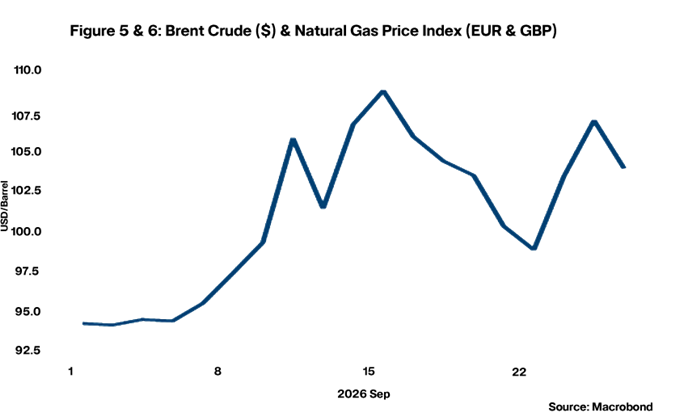
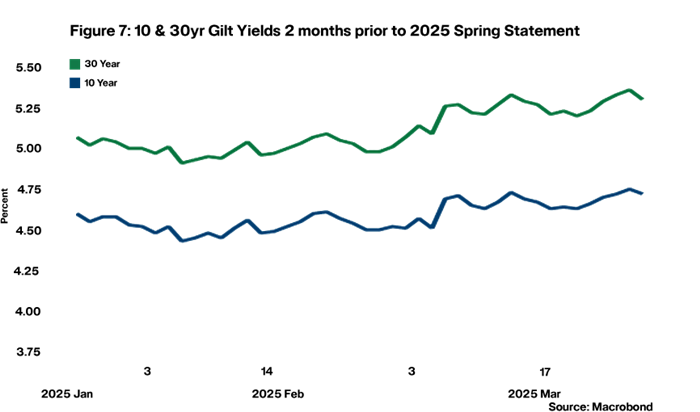
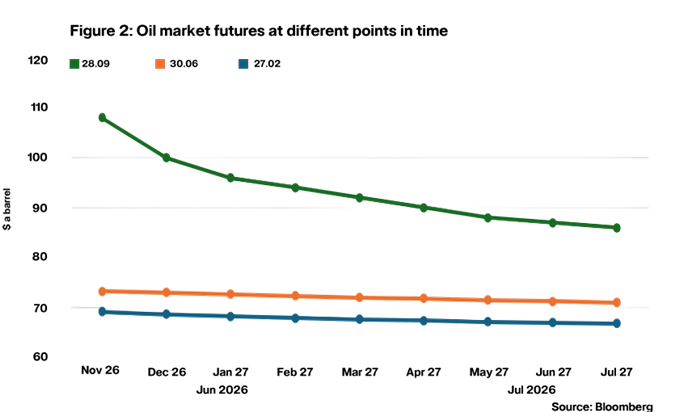
Much attention is now naturally being given to the budget on 28 October and the backdrop looks bleak. Oil prices have hovered around the $100 mark throughout September while gas prices are more than double their pre-war level, which will likely end up pushing inflation above the 4% mark (Ofgem announced a 16% increase in the price cap for January 2027 – the largest in 4 years). Moreover, government borrowing costs are reaching alarming levels: as of 28 September, the 10-year gilt yield is sitting at around 5.4% compared to the previous OBR assumption of around 4.5%.
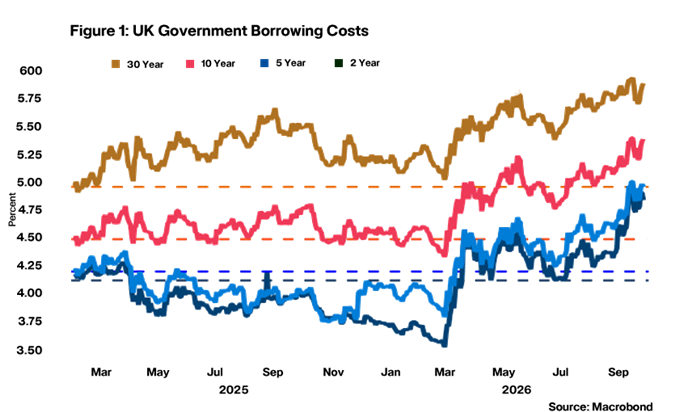
Note: Dotted lines show gilt yield levels assumed at the previous OBR review
The government appears unlikely to announce any material measures to curtail spending, so not for the first time there is growing speculation about what tax increases might be announced given fiscal headroom has been squeezed. There has been speculation, for example, relating to targeted industry taxes (e.g. a further levy on oil and gas exploration), changes to capital gains tax or lowering the threshold for the upcoming mansion tax. The prospect of a third tax-raising budget in a row clearly raises concerns about whether consumer and business confidence will be damaged, which has prompted Andy Haldane, former chief economist of the Bank of England, to call for a three-year moratorium on further tax rises.
We only have to look back to the mini-Budget debacle in 2022 to know what could go wrong if the budget on 28 October is not viewed as credible by markets. So the risks of getting this budget wrong are crystal clear but it is worth emphasising that the pressure on sovereign debt markets is certainly not unique to the UK at the moment. Indeed, since Andy Burnham entered Downing Street, there has in fact been a narrowing of spreads between UK gilts and other G7 markets, especially French Oats and US Treasuries. In summary, risks in the government bonds space are rising across the board.
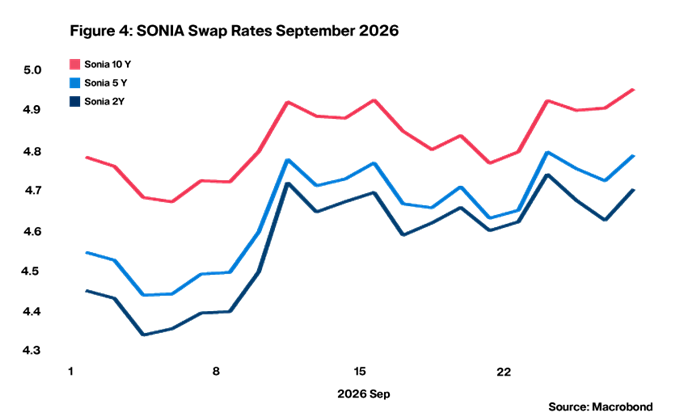
Moreover, it is notable that our latest Global Macro Forecast Opens in a new window assumes that 2027 and 2028 will see modest growth (1.2% in 2027 and 1.4% in 2028) with inflation elevated but on a declining trajectory. Why? Primarily because we project that geopolitical risk will eventually recede over the coming months, which would prompt a major fall in energy prices and government bond yields. We, of course, saw this happen in mid-June when there was a provisional ceasefire deal signed between the US and Iran.
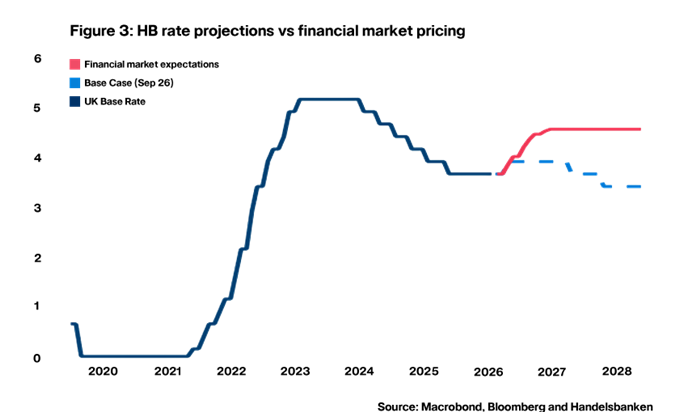
The Bank of England held base rate in September but a hike in interest rates is now just around the corner. Financial markets appear to be baking in an assumption that current levels of elevated geopolitical risk remain in place into the medium term but, as we disagree with this judgement, our forecasts very much diverge. Markets currently price in over four rate hikes in the next year while Handelsbanken’s latest forecast points to one rate hike at the next meeting in November but an improving outlook in 2027 ends up allowing for a couple of rate cuts in late 27/early 28.
I will leave you with an analogy that I have been telling clients over the past couple of weeks. John Healey is driving a car and he is about to approach an almighty speed bump, which has grown over the past couple of weeks. There is a non-negligible risk that he ends up wrecking the car as he hits the speed bump, but we judge that he will just about manage to clear it with the car intact. As geopolitical risk recedes, the road ahead has some potholes and is not especially well maintained but it is certainly drivable. And a couple of years hence, the tarmac may even become smoother and better to drive on, as the UK potentially reaps the benefits of AI adoption. So, just maybe it’s not all doom and gloom?
Daniel Mahoney, Senior Economist, UK